For decades, global financial markets have relied on complex infrastructures to facilitate the ownership, transfer, and settlement of assets. Real estate transactions often require multiple intermediaries and lengthy legal procedures. Securities trading depends on centralized institutions and settlement systems, while commodity markets remain accessible primarily to large investors and institutional participants. Despite continuous technological progress, many traditional financial systems remain costly, fragmented, and inefficient.
Blockchain technology is introducing an alternative approach that could fundamentally reshape how assets are issued, traded, and owned. Through tokenization, virtually any asset can be represented digitally on a blockchain, enabling faster transactions, greater accessibility, and entirely new models of ownership.
Asset tokenization is increasingly being recognized as one of the most promising applications of blockchain technology. Unlike speculative cryptocurrency trading, tokenization focuses on improving existing financial infrastructure by bringing real-world assets into digital ecosystems. Governments, banks, investment firms, and technology companies are investing heavily in the development of tokenized markets that could redefine the future of global finance.
The transition from traditional asset ownership to blockchain-based representations may prove to be one of the most significant financial innovations of the coming decades.
What Is Asset Tokenization?
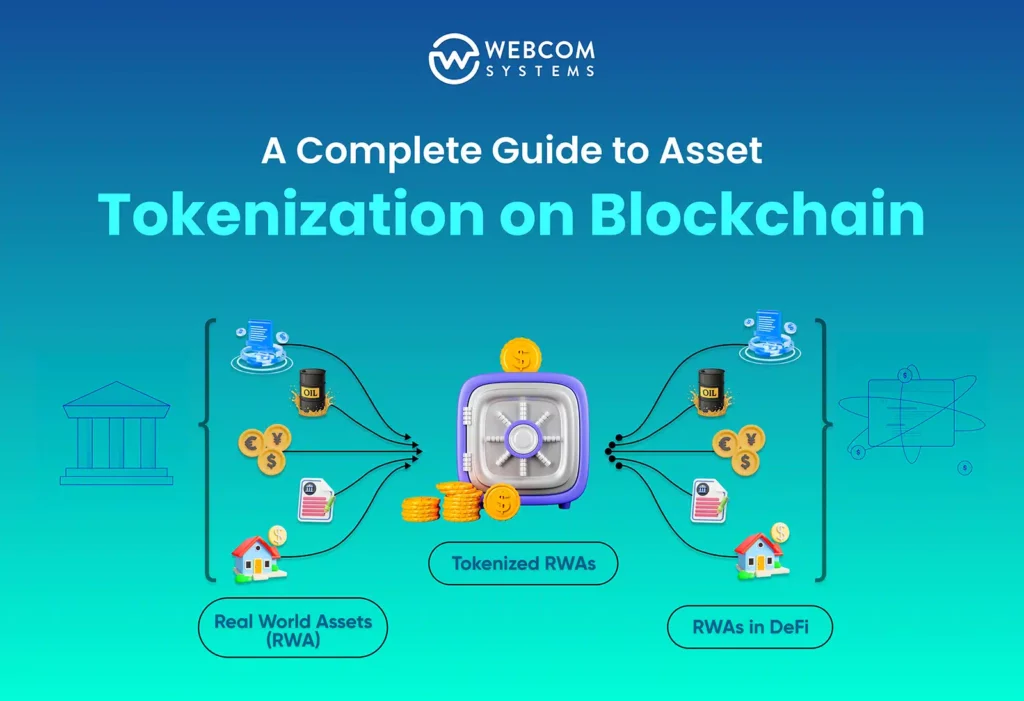
Asset tokenization is the process of converting ownership rights of physical or financial assets into digital tokens that exist on a blockchain network.
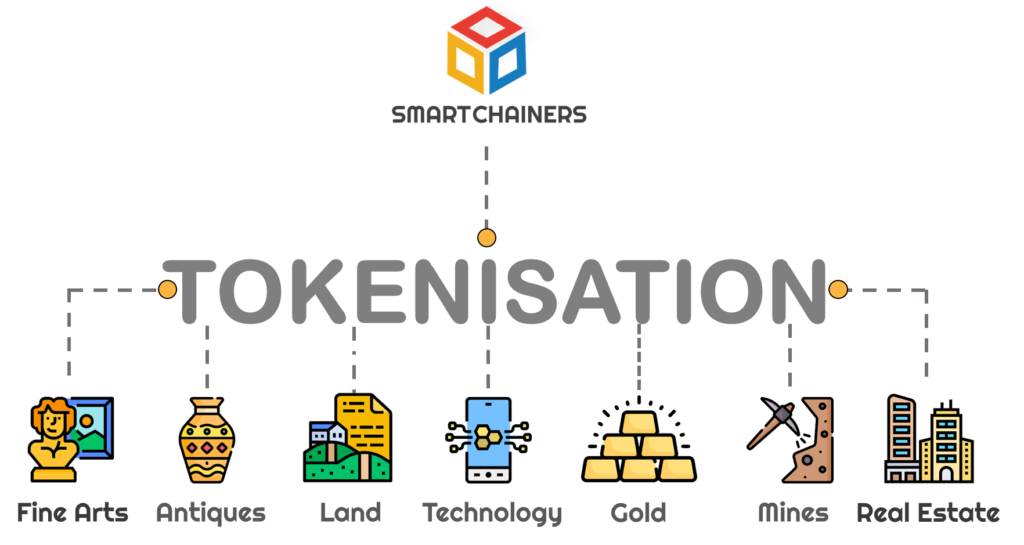
These tokens can represent ownership interests in assets such as:
- Real estate properties.
- Corporate shares.
- Government bonds.
- Commodities.
- Investment funds.
- Intellectual property.
- Luxury goods.
- Infrastructure projects.
Each token serves as a digital representation of a specific asset or a fractional ownership stake. Blockchain technology provides transparency, security, and programmability, allowing ownership records to be managed more efficiently than many traditional systems.
Tokenization does not change the underlying value of an asset. Instead, it modernizes the infrastructure used to manage ownership and transactions.
Why Traditional Markets Need Modernization
Many financial systems continue to face longstanding challenges.
Traditional asset markets often suffer from:
- Limited liquidity.
- High transaction costs.
- Administrative inefficiencies.
- Restricted market access.
- Lengthy settlement periods.
- Complex regulatory procedures.
- Dependence on multiple intermediaries.
These inefficiencies affect both institutional and retail participants.
For example, purchasing real estate typically involves:
- Legal documentation.
- Financial institutions.
- Escrow services.
- Regulatory approvals.
- Property registration processes.
- Settlement procedures.
Similarly, transferring ownership of financial assets frequently requires centralized clearing and settlement infrastructures.
Tokenization offers opportunities to simplify and improve these processes through digital ownership frameworks.
Tokenized Real Estate
Real estate represents one of the most compelling use cases for asset tokenization.
Traditional real estate investments are often characterized by:
- High capital requirements.
- Limited liquidity.
- Geographic barriers.
- Lengthy transaction timelines.
- Significant administrative expenses.
Tokenization introduces several important advantages.
Fractional Ownership
Blockchain enables properties to be divided into smaller ownership units represented by digital tokens.
Benefits include:
- Lower investment barriers.
- Greater accessibility for retail investors.
- Improved portfolio diversification.
- Expanded global investment opportunities.
Investors no longer need substantial capital to gain exposure to high-value real estate assets.
Fractional ownership models have the potential to democratize access to property markets while increasing investment flexibility.
Improved Liquidity
Real estate is traditionally considered an illiquid asset.
Tokenized ownership may facilitate:
- Secondary market trading.
- Faster ownership transfers.
- Reduced transaction costs.
- Expanded investor participation.
Improved liquidity benefits both property owners seeking capital and investors seeking flexible investment opportunities.
Automated Ownership Management
Blockchain-based systems can automate various aspects of real estate administration, including:
- Dividend distributions.
- Ownership transfers.
- Compliance procedures.
- Investor reporting.
- Governance mechanisms.
Smart contracts significantly reduce administrative complexity while improving operational transparency.
Tokenizing Financial Securities
Financial markets are already highly digital, yet many settlement processes remain surprisingly inefficient.
Tokenized securities offer several potential advantages over traditional models.
Faster Settlements
Conventional securities settlements may require multiple intermediaries and several business days to complete.
Blockchain technology enables:
- Near real-time settlements.
- Reduced counterparty risks.
- Improved operational efficiency.
- Lower administrative costs.
Faster settlements improve capital efficiency for both investors and financial institutions.
Enhanced Transparency
Blockchain provides immutable transaction records that improve:
- Ownership verification.
- Regulatory reporting.
- Audit capabilities.
- Market transparency.
These benefits are particularly valuable in increasingly complex global financial markets.
Global Accessibility
Tokenized financial assets may significantly expand access to investment opportunities across international markets.
Potential advantages include:
- Cross-border investment participation.
- Expanded market liquidity.
- Reduced infrastructure barriers.
- Greater financial inclusion.
The tokenization of securities has the potential to create more interconnected global capital markets.
Commodities on the Blockchain
Commodity markets have historically been dominated by institutional participants and large-scale investors.
Blockchain-based tokenization is expanding opportunities across assets such as:
- Gold.
- Silver.
- Oil.
- Agricultural products.
- Industrial metals.
- Carbon credits.
Digital Ownership Models
Tokenized commodities allow investors to hold blockchain-based representations of physical assets without necessarily managing storage or transportation requirements.
Benefits include:
- Fractional ownership opportunities.
- Simplified transactions.
- Increased market accessibility.
- Improved transparency.
Commodity tokenization may significantly lower entry barriers for smaller investors while increasing market efficiency.
Supply Chain Transparency
Blockchain technologies also improve commodity markets by enhancing supply chain visibility.
Tokenized commodity ecosystems can provide information regarding:
- Asset origins.
- Production methods.
- Transportation records.
- Sustainability certifications.
- Regulatory compliance.
Transparency is becoming increasingly important as consumers and investors prioritize responsible sourcing practices.
Smart Contracts and Asset Management
Smart contracts play a critical role in tokenized ecosystems.
These programmable agreements can automate various functions, including:
- Ownership transfers.
- Dividend payments.
- Compliance requirements.
- Governance processes.
- Revenue distributions.
- Corporate actions.
Automation reduces operational costs while improving reliability and transparency.
Examples of potential applications include:
- Automatic rental income distributions for tokenized real estate.
- Instant dividend payments for tokenized equities.
- Automated commodity settlement procedures.
- Regulatory reporting mechanisms.
The integration of smart contracts significantly enhances the functionality of tokenized assets.
Institutional Adoption Is Accelerating
Institutional interest in asset tokenization has increased substantially in recent years.
Financial institutions recognize several strategic advantages:
- Operational efficiency.
- Improved liquidity.
- Reduced settlement risks.
- Expanded product offerings.
- Greater accessibility for investors.
Institutional adoption is particularly important because large organizations possess the infrastructure and regulatory expertise necessary to scale tokenized financial products responsibly.
Banks and investment firms are actively exploring blockchain-based solutions for:
- Securities issuance.
- Investment fund administration.
- Cross-border settlements.
- Digital custody services.
- Treasury operations.
Asset tokenization is increasingly viewed as a natural evolution of modern financial infrastructure.
Regulatory Challenges
Despite its enormous potential, tokenization faces several regulatory challenges.
Key considerations include:
- Securities regulations.
- Investor protections.
- Tax treatment.
- Cross-border compliance requirements.
- Custody standards.
- Anti-money laundering obligations.
Regulators must determine how existing legal frameworks apply to blockchain-based ownership models.
Questions include:
- How should tokenized assets be classified?
- Which jurisdictions govern international transactions?
- What rights do token holders possess?
- How should disputes be resolved?
Legal certainty will play a critical role in determining the pace of institutional and consumer adoption.
Infrastructure Requirements
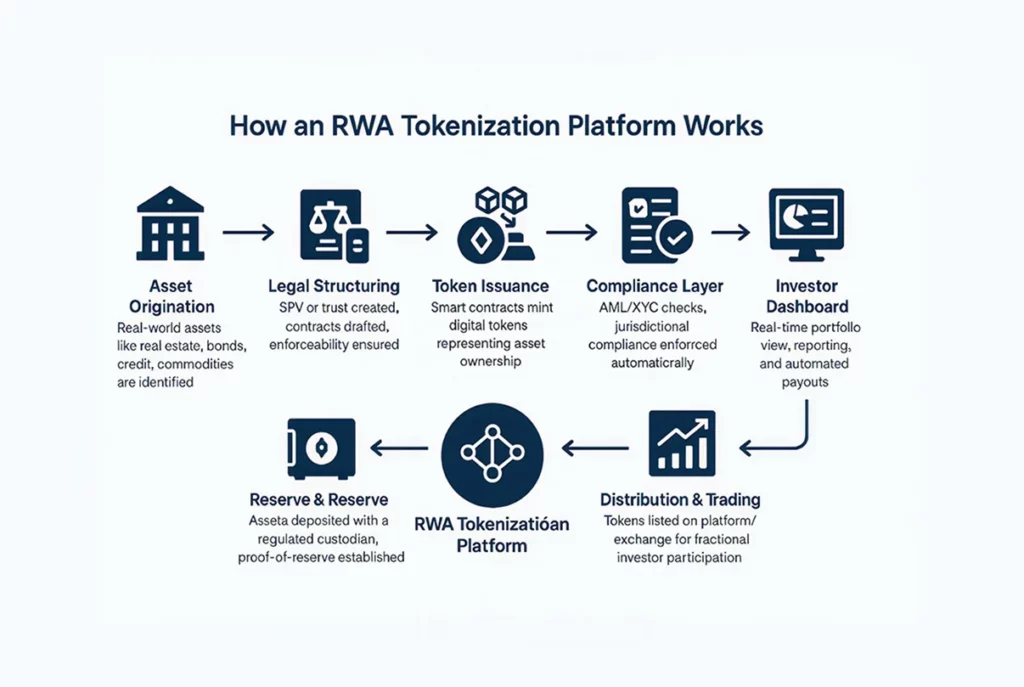
Building tokenized markets requires sophisticated infrastructure capable of supporting:
- Blockchain networks.
- Digital custody solutions.
- Compliance mechanisms.
- Identity verification systems.
- Secondary trading platforms.
- Regulatory reporting tools.
Interoperability between traditional financial systems and blockchain-based platforms remains essential.
The future of tokenization will likely depend on hybrid infrastructures that integrate existing financial institutions with decentralized technologies.
The Benefits of Tokenized Markets
If implemented successfully, asset tokenization offers numerous advantages for global financial markets.
These include:
Greater Accessibility
Tokenization lowers investment barriers by enabling fractional ownership and global participation.
Increased Efficiency
Automated processes reduce administrative complexity and settlement times.
Improved Liquidity
Digital marketplaces expand trading opportunities for traditionally illiquid assets.
Enhanced Transparency
Blockchain technology provides secure and auditable ownership records.
Financial Innovation
Tokenization creates opportunities for entirely new investment products and business models.
Collectively, these benefits have the potential to significantly improve financial market infrastructure.
The Future of Tokenized Assets
Several trends are expected to shape the future of asset tokenization.
These include:
- Greater institutional participation.
- Expanded regulatory frameworks.
- More sophisticated digital custody solutions.
- Increased interoperability between blockchain networks.
- Broader adoption of tokenized investment products.
- Enhanced compliance technologies.
- Improved consumer accessibility.
Over time, tokenized assets may become increasingly indistinguishable from traditional financial products from a user experience perspective.
Consumers and investors may interact with tokenized securities and digital ownership systems without necessarily recognizing the underlying blockchain infrastructure.
The technology will become valuable precisely because it becomes invisible.
Conclusion
Asset tokenization represents one of blockchain technology’s most practical and transformative applications. By bringing real estate, financial securities, and commodities onto blockchain networks, tokenization has the potential to improve accessibility, liquidity, transparency, and operational efficiency across global markets.
While regulatory and technological challenges remain, institutional interest and infrastructure development continue to accelerate. Tokenization is not merely creating new digital assets—it is modernizing how ownership itself is recorded, transferred, and managed.
The future of financial markets will likely combine traditional institutions with blockchain-based innovation. Tokenized assets are poised to become a foundational component of that evolution, opening investment opportunities to broader audiences while enhancing the efficiency of global financial systems.
As blockchain technology matures, tokenization may ultimately redefine the relationship between investors and the assets they own, making ownership more flexible, transparent, and accessible than ever before.