For years, blockchain technology has been associated primarily with cryptocurrencies, speculative investments, and headlines promising revolutionary change across every industry imaginable. While much of the public conversation has focused on digital assets and market volatility, an entirely different story has been unfolding behind the scenes. Today, some of the most meaningful blockchain implementations are taking place not in speculative financial markets, but in the real economy.
Businesses are increasingly adopting distributed ledger technology (DLT) to solve practical challenges related to transparency, traceability, security, and operational efficiency. Rather than attempting to disrupt entire industries overnight, companies are using blockchain to improve supply chain management, automate auditing procedures, and create more reliable systems for recording and verifying information.
The modern blockchain landscape is less about hype and more about infrastructure. Enterprises are beginning to recognize that blockchain’s greatest value lies in its ability to create trusted environments where multiple participants can collaborate without relying on a single controlling entity. In logistics and auditing, this capability has become particularly valuable.
Moving Beyond Cryptocurrency
Blockchain technology is fundamentally a distributed database that allows information to be stored across multiple participants in a network. Every transaction or record is verified through consensus mechanisms and becomes extremely difficult to alter once added to the ledger.
Unlike traditional centralized systems, distributed ledgers provide several important advantages for businesses:
- Increased transparency across multiple stakeholders.
- Enhanced security through cryptographic verification.
- Improved traceability of assets and transactions.
- Reduced operational inefficiencies.
- Lower dependency on intermediaries.
- More reliable and tamper-resistant data management.
The business world has gradually shifted its focus from asking whether blockchain will replace existing systems to determining where it can provide measurable improvements.
Enterprise adoption is no longer driven by technological enthusiasm alone. Companies are investing in blockchain solutions because they address real-world problems that conventional databases often struggle to solve efficiently.
Blockchain in Supply Chain Management
Global supply chains are among the most complex systems in the modern economy. A single consumer product may involve dozens of suppliers across multiple countries, transportation providers, customs authorities, warehouses, distributors, and retailers.
Traditional supply chain management systems often suffer from several limitations:
- Fragmented data storage.
- Limited visibility between participants.
- Manual verification processes.
- Difficulties tracking product origins.
- Increased vulnerability to fraud and counterfeiting.
- Delays caused by inefficient documentation procedures.
Distributed ledger technology offers a compelling solution by creating a shared source of truth accessible to authorized participants throughout the supply chain.
Product Traceability
One of blockchain’s most practical applications is product traceability. Every stage of a product’s journey can be recorded on a blockchain network, creating an immutable history of its movement.
For example, manufacturers can record:
- Raw material sourcing.
- Production dates.
- Quality inspections.
- Shipping information.
- Customs documentation.
- Warehouse storage conditions.
- Delivery confirmations.
This level of transparency significantly improves accountability among supply chain participants.
Consumers increasingly demand information about where products originate and how they are manufactured. Industries such as food production, pharmaceuticals, luxury goods, and electronics particularly benefit from transparent supply chain records.
When contamination, defects, or recalls occur, companies can identify affected batches almost immediately rather than investigating through fragmented databases and paper documentation.
Reducing Counterfeit Products
Counterfeit goods remain a multibillion-dollar global problem. Luxury brands, pharmaceutical companies, and electronics manufacturers face substantial losses due to unauthorized replicas entering international markets.
Blockchain enables the creation of unique digital identities for physical products. Combined with technologies such as QR codes, RFID tags, and IoT devices, distributed ledgers provide verifiable proof of authenticity.
A product’s blockchain record can include:
- Manufacturing information.
- Ownership history.
- Certification records.
- Transportation logs.
- Retail distribution data.
Consumers and business partners can independently verify product legitimacy without relying solely on centralized databases maintained by manufacturers.
Improving Logistics Operations
Logistics networks involve numerous organizations that traditionally maintain separate databases and documentation systems.
Blockchain can improve collaboration among:
- Shipping companies.
- Freight forwarders.
- Customs agencies.
- Warehouses.
- Insurance providers.
- Retail distributors.
- Financial institutions.
By providing synchronized access to shared records, distributed ledgers reduce administrative overhead and minimize discrepancies between participants.
Documentation processes that previously required extensive manual reconciliation can be streamlined significantly. Shipping delays caused by missing or inconsistent records become easier to resolve when all stakeholders have access to identical information.
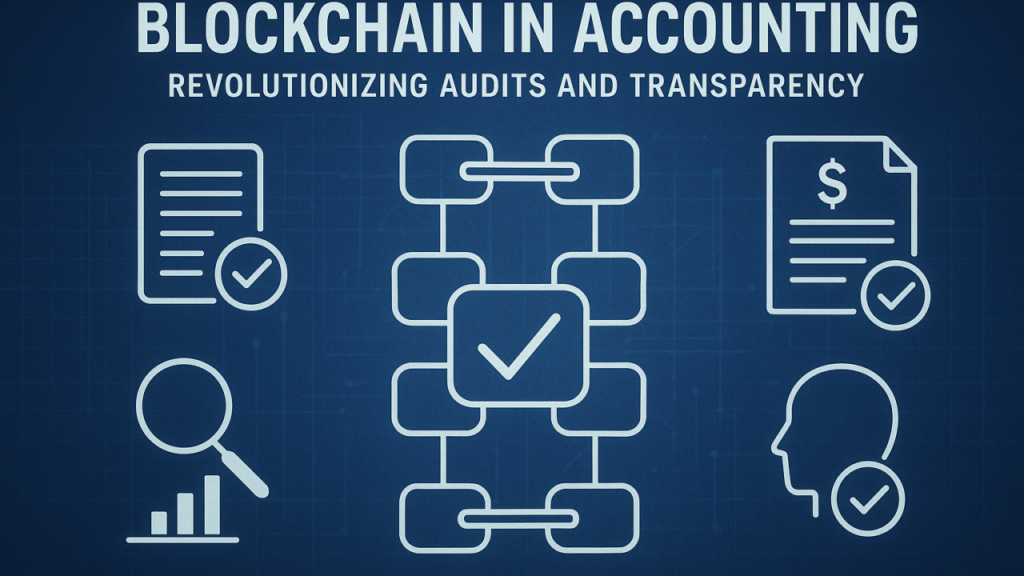
The Role of Blockchain in Modern Auditing
Auditing has historically been a labor-intensive process involving document verification, transaction analysis, and extensive cross-checking between multiple systems.
Traditional auditing methods present several challenges:
- High operational costs.
- Delayed reporting.
- Human errors.
- Limited real-time visibility.
- Increased compliance burdens.
- Difficulties verifying large transaction volumes.
Blockchain technology introduces a new approach often described as continuous or real-time auditing.
Immutable Financial Records
One of blockchain’s strongest features is immutability. Once information has been validated and recorded, unauthorized modifications become extremely difficult.
This characteristic significantly improves:
- Financial reporting reliability.
- Internal controls.
- Regulatory compliance.
- Fraud detection.
- Transaction transparency.
Auditors can access cryptographically secured records rather than relying exclusively on manually generated reports.
Rather than auditing historical data periodically, organizations can implement systems that continuously verify transactions as they occur.
Real-Time Compliance Monitoring
Regulatory compliance requirements continue to expand across industries. Companies are expected to maintain detailed records while demonstrating adherence to increasingly complex legal frameworks.
Blockchain-based compliance systems offer several advantages:
- Automated transaction tracking.
- Transparent audit trails.
- Time-stamped documentation.
- Reduced reporting delays.
- Improved accountability.
- Enhanced regulatory oversight.
Continuous monitoring can significantly reduce the time and resources required for compliance-related activities.
Industries such as healthcare, finance, and international trade particularly benefit from transparent recordkeeping systems that facilitate regulatory reporting.
Fraud Prevention
Corporate fraud remains a significant concern for businesses worldwide. Manipulation of financial records and unauthorized data alterations can result in substantial financial and reputational damage.
Distributed ledgers help mitigate these risks by creating:
- Tamper-resistant transaction histories.
- Multi-party verification mechanisms.
- Transparent operational records.
- Improved accountability across departments.
Blockchain does not eliminate fraud entirely. However, it substantially increases the difficulty of altering records without detection.
Fraud prevention becomes especially effective when blockchain systems are integrated with identity verification and automated monitoring tools.

Combining Blockchain with Emerging Technologies
Blockchain achieves its greatest potential when combined with complementary technologies.
Internet of Things (IoT)
IoT devices continuously generate operational data across supply chains and industrial environments.
Examples include:
- Temperature monitoring.
- Shipment tracking.
- Inventory management.
- Equipment maintenance records.
- Environmental condition monitoring.
Blockchain can securely store and verify IoT-generated information, creating trusted datasets for business operations.
Artificial Intelligence
Artificial intelligence depends heavily on data quality and reliability. Blockchain can improve AI systems by providing verifiable datasets that reduce the risk of manipulation or inaccurate inputs.
Together, AI and blockchain enable:
- Predictive supply chain analytics.
- Automated auditing.
- Intelligent compliance monitoring.
- Operational optimization.
- Risk assessment.
Smart Contracts
Smart contracts further enhance logistics and auditing processes by automatically executing predefined business rules.
Potential applications include:
- Automatic supplier payments.
- Shipment confirmation procedures.
- Insurance claim processing.
- Regulatory reporting.
- Contract enforcement.
- Inventory management.
Automation reduces administrative costs while minimizing human intervention in routine processes.
Challenges to Enterprise Adoption
Despite its advantages, blockchain adoption is not without obstacles.
Scalability
Large enterprises process enormous volumes of transactions daily. Many blockchain networks continue to face scalability limitations that affect throughput and performance.
Organizations must carefully evaluate whether blockchain provides sufficient operational benefits compared to traditional database architectures.
Integration Costs
Implementing blockchain infrastructure often requires significant investments in:
- Software development.
- Staff training.
- System integration.
- Security measures.
- Compliance frameworks.
Legacy systems remain deeply embedded in corporate operations, making gradual adoption more practical than complete replacement.
Data Privacy
Transparency must be balanced with confidentiality.
Businesses frequently handle sensitive information related to:
- Customers.
- Suppliers.
- Financial transactions.
- Intellectual property.
- Regulatory obligations.
Permissioned blockchain networks have emerged as a popular solution, allowing organizations to maintain transparency while restricting access to authorized participants.
Regulatory Uncertainty
Blockchain regulations continue to evolve globally. Companies operating across multiple jurisdictions must navigate varying legal frameworks governing:
- Digital records.
- Data protection.
- Financial reporting.
- Cross-border transactions.
- Smart contracts.
Regulatory clarity will play a significant role in accelerating enterprise adoption over the coming decade.
The Future of Enterprise Blockchain
Blockchain’s future in business is unlikely to resemble the early narratives that promised immediate disruption across every industry.
Instead, its long-term impact is becoming increasingly practical and infrastructure-oriented.
Future developments are likely to include:
- Greater interoperability between blockchain networks.
- Increased automation through smart contracts.
- Expanded use of tokenized business assets.
- Real-time auditing capabilities.
- More sophisticated supply chain transparency tools.
- Deeper integration with artificial intelligence and IoT technologies.
The most successful enterprise blockchain solutions will likely remain largely invisible to end users. Consumers may benefit from faster logistics, safer products, and more transparent supply chains without ever realizing that distributed ledger technology operates behind the scenes.
Conclusion
Blockchain has matured beyond speculative headlines and cryptocurrency market cycles. Its most valuable contributions are increasingly found in solving operational challenges within the real economy.
In logistics, distributed ledgers improve transparency, traceability, and collaboration across complex global supply chains. In auditing, they enable more reliable financial reporting, automated compliance monitoring, and stronger fraud prevention mechanisms.
The future of blockchain in business is not about replacing every existing system. It is about selectively enhancing processes where trust, transparency, and data integrity are critical. Companies that approach blockchain as a practical business tool rather than a technological trend are already demonstrating how distributed ledgers can deliver measurable value.
As adoption continues to expand, blockchain may become one of the most important invisible technologies powering modern enterprise infrastructure—not because of hype, but because of its ability to solve real-world problems efficiently and securely.